
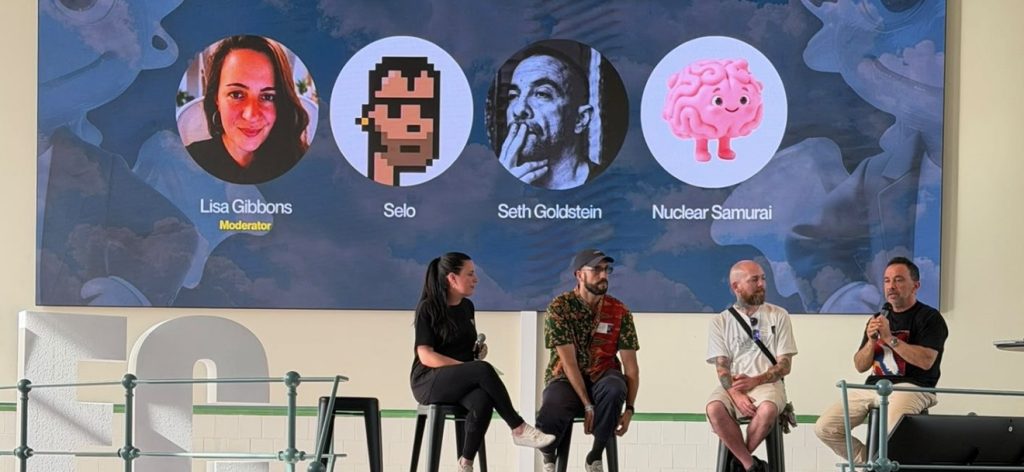
The Non-Fungible Conference (NFC) Summit 2026 in Lisbon has once again proven to be the epicenter of the creative economy and Web3 innovation. Amidst the backdrop of the Unicorn Factory, where the physical and digital worlds blur, one of the most provocative discussions centered on the rise of “Agentic Systems”—autonomous entities capable of generating and evolving art with minimal human oversight.
mewe’s Head of Marketing, Lisa Gibbons, took the stage alongside two titans of the tech and investment worlds: Seth Goldstein, the prolific American entrepreneur and founder of Spirit Protocol, and Selo, the visionary founder and CEO of the investment powerhouse ElevenYellow.
The Panelists: A Convergence of Expertise
The discussion brought together a unique blend of marketing strategy, entrepreneurial grit, and technical investment foresight:
- Lisa Gibbons (mewe): Leading the charge on the SOSHI token roadmap and decentralized social infrastructure, Lisa provided a crucial lens on how autonomous creativity interacts with user ownership and digital identity.
- Seth Goldstein (Spirit Protocol): A veteran of the tech scene with three decades of experience co-founding six companies (including Turntable.fm and Bright Moments), Seth brought deep insight into the intersection of technology, art, and human connection.
- Selo (ElevenYellow): As the force behind the Botto ecosystem—an autonomous AI artist that has become a pop-cultural icon—Selo offered a firsthand look at how investment apps are fueling the next generation of creative machines.
Defining Agentic Systems
The core of the conversation revolved around agentic systems: AI-driven frameworks designed to not just generate images, but to curate and evolve artistic styles autonomously. These systems represent a shift from AI as a tool to AI as a collaborator—or even a primary creator.
The panel explored how these agents, such as the ones seen in the Spirit Protocol installations at the summit, react to audience interaction in real-time, allowing the art to evolve based on collective human presence without direct “one-click” commands.
Authorship and the Ethics of Autonomous Art
One of the most heated segments of the discussion touched upon the ethics of production. When a system like Botto curates its own output based on community feedback, who is the true author?
- The Role of the Human: The panelists debated the “minimal human intervention” model. Lisa Gibbons emphasized that while the machine may create, the human-centered social era must ensure that authorship remains transparent and that creators (human or hybrid) are fairly rewarded.
- Ethical Guardrails: As generative AI continues to grow, the panel stressed the importance of media literacy and clear boundaries—a sentiment echoed in the conference’s ACAI workshops, which advocate for playful yet transparent AI experimentation.
The Future of Artistic Production
As the panel concluded, the consensus was clear: the future of the creative economy is not just digital; it is autonomous.
Whether it is through “Agentic Interactions” that shape immersive installations or investment apps that allow communities to fund and govern AI artists, the role of autonomous creativity is expanding. For mewe, this evolution is a key component of the 2026 roadmap, as the platform seeks to integrate these advanced technologies while maintaining a privacy-first, user-owned environment.
The conversation at NFC Lisbon made it evident that we are moving beyond the era of simple AI tools into a world where machine intelligence and human imagination co-evolve to produce works that were previously unimaginable.